
Grinding Centers

Vertical Multi-Process Grinding Machines

Small-type Vertical Grinding Machines

Deep-Hole Grinding Machines

Internal Grinding Machines

Thread Grinding Machines

CLOSE

Customer Case Example

  • Customer Case Example 2022/09/09 UP
  • Print

Hyogo Prefectural Monodzukuri Institute

Aiming to Develop Multi-Skilled Instructors:
Conducting e-learning and practical training for teaching staff

シェア

Hyogo Prefectural Monodzukuri Institute is an education and training facility aimed at training manufacturing personnel. The Machining Course lasts one year, in which students use equipment such as general-purpose machines and 5-axis machining centers to learn how to machine precision parts. DMG MORI had loaned a free DMU 40 eVo linear to the institute in 2021 academic year, and we decided to use this opportunity to conduct a Siemens control 5-axis machining center training course consisting of e-learning and two days of practical training.
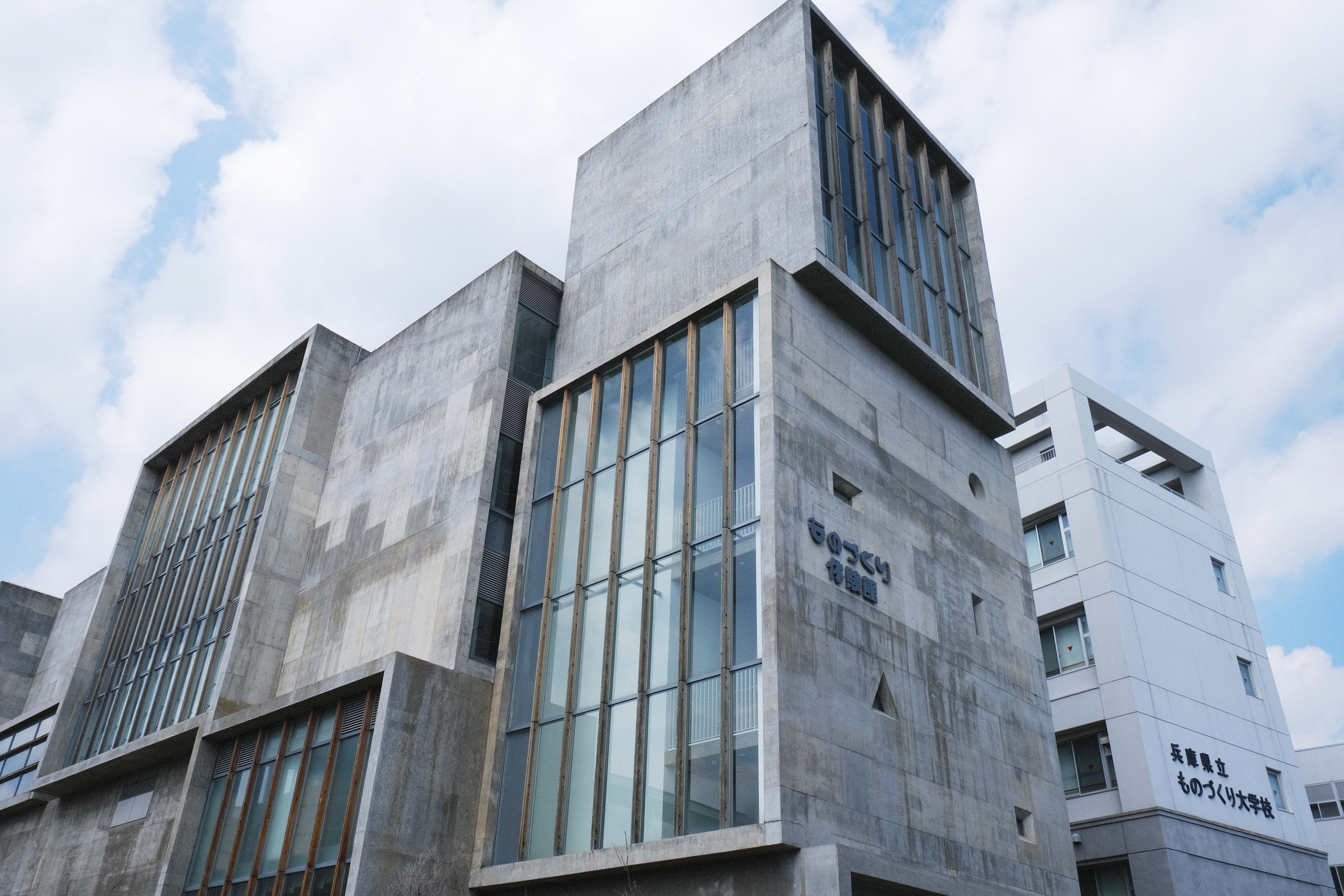
Hyogo Prefectural Monodzukuri Institute (rear) and the Hands-on Monodzukuri Building (front)
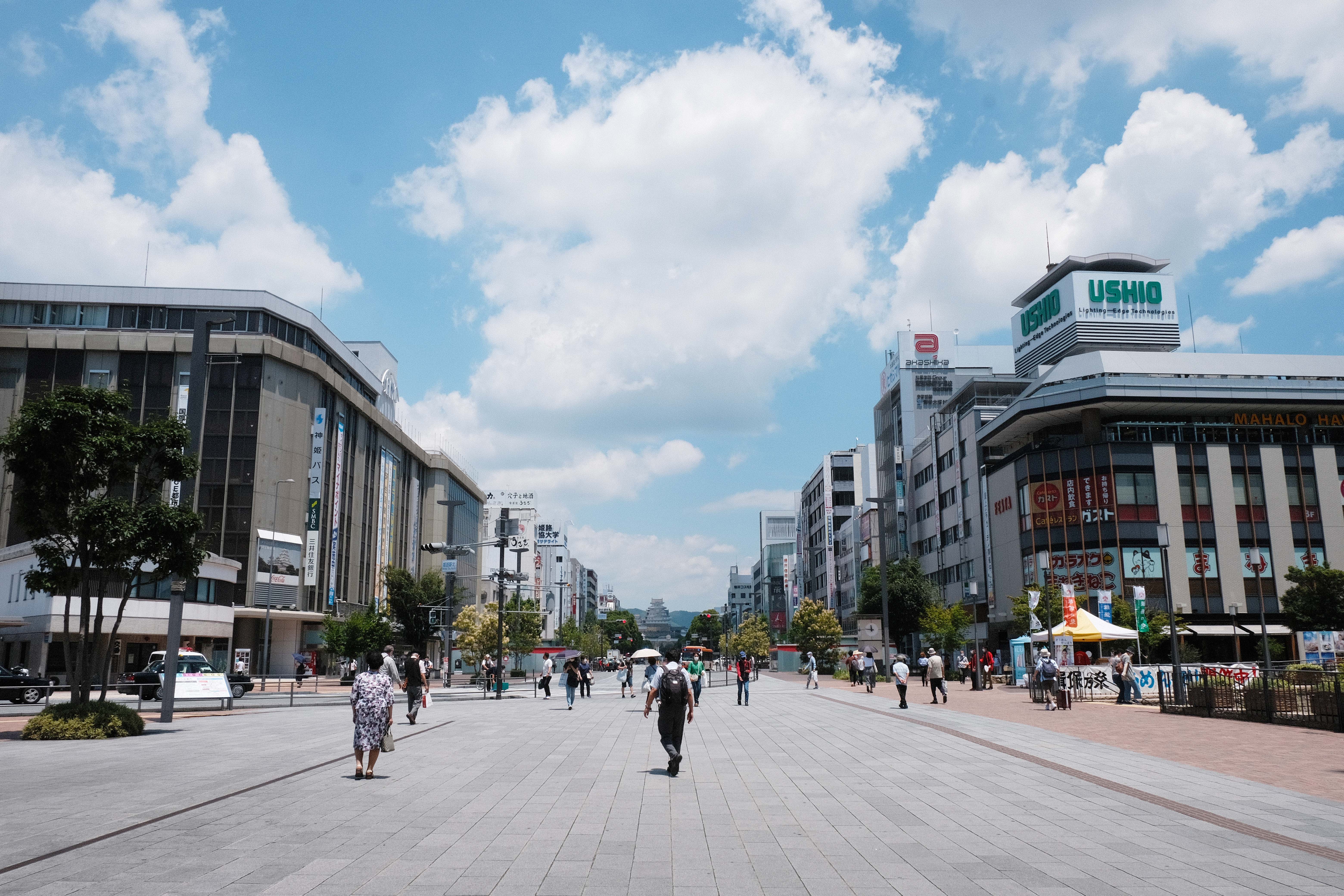

Located one station away from Himeji Castle, a national treasure that is also registered as a UNESCO World Heritage

Learning how to use a Siemens control unit for the first time

The relationship between DMG MORI and Hyogo Prefectural Monodzukuri Institute began with the signing of the "Agreement on Cooperation between Hyogo and DMG MORI CO., LTD. on Training Manufacturing Personnel" in April 2020. According to this agreement, DMG MORI would loan the institute one turning center and one machining center at no cost. The first machine to be delivered was a NLX 2000|500 turning center. Daisuke Takamatsu, Vocational Education Specialist in the Machining Course, explains why this machine was selected. "When students first start classes in April, they focus on learning the basics of machining and CAD/CAM in the classroom. From January the following year, they begin practical training using actual equipment to work on machining projects they design themselves based on the knowledge from classroom lectures. They have to fabricate complicated parts such as propellers during practical training, and the existing machines required setup many times for machining. We asked DMG MORI if they knew of a better solution, and they let us use an NLX 2000|500 with right spindle, free of charge. This machine is capable of double-sided continuous machining, so students can experience state of the art one chucking machining. I think this really helps the learning process, since they can actually use the latest technology in their own projects."

From left to right:/
Daisuke Takamatsu (responsible for teaching everything from CAD to general machining) and Hiroshi Naito (responsible for professional training)

The institute began considering a machining center as its second free loaned machine during the 2021 academic year. They went with a DMU 40 eVo linear equipped with FD function capable of performing both 5-axis milling and turning in order to differentiate it from the DMG MORI DMU 50, 5-axis machining center they were already using. This DMU 40 eVo linear machine uses a Siemens control, and so this was the first time the institute would be using Siemens. Although instructors were used to FANUC controls, they had never used or even seen a Siemens control. While still wondering how to make the best use of the machine, the institute received a proposal from Tadashi Tsuji (Vice President of Technium CO., LTD.) to conduct a "DMU 50 Siemens Course" consisting of e-learning and two days of practical training. The course would be attended by a total of four instructors: Mr. Takamatsu, Motoyori Nagai (another Machining Course instructor), Masamichi Akiyama, CAD Course instructor, and a new instructor from Hyogo Prefectural Tajima Technical Institute. "We thought we'd start by having the instructors learn the basics of Siemens control," reflects Tadashi Tsuji from Technium. "They were busy teaching their own classes, so we wanted to minimize time but maximize results. We decided to propose a hybrid course consisting of e-learning and two days of practical training."

Pieces fabricated by students. Students handle everything from design to machining. Instructors structure courses with the joy of machining firmly in mind.

Recalling e-learning content for use during practical training

Masamichi Akiyama is mainly responsible for the CAD Course

The e-learning portion of the "DMU 50 Siemens Course" began in December 2021, while the two days of practical training were conducted beginning in February 2022 at DMG MORI Academy, a training facility located on the DMG MORI Iga Campus. Mr. Takamatsu emphasizes the benefits of e-learning. "We helped develop Digital Academy, and so we had attended e-learning during the trial stage, for the Machining Center Basic Course in 2020 (e-learning and 2.5 days of practical training) and then again for the Turning Center Basic Course in 2021. We had been using machining centers and turning centers for some time and understood this technology, but we had never used Siemens before. There were honestly some things that were hard to visualize, but each study unit ended with a summary and quiz, so we could reflect back on the key points and gradually learn and understand the content. We do normally prepare our own materials for our classes, so the structure and explanations of e-learning are also informative." "The e-learning course was very easy to follow, and carefully explained everything about 5-axis machining from the basics to operation methods," adds Mr. Akiyama. "Among them, the video showing the operation panel screen and the tools' movement linked to the panel was especially helpful for understanding."

How did the four instructors manage to complete the e-learning course while still teaching full-time? "We couldn't do the practical training until we completed the e-learning course, so we needed to complete the course in January," explains Mr. Akiyama. "I used downtime between classes and after school to take the course, and was able to complete it in December." Mr. Takamatsu took a slightly different approach. "When I took the Machining Center Basic and Turning Center Basic courses, I began to run out of time during the second half and struggled to complete them. That's why I decided this time to learn as much I could before the end of the year, and so I was somehow able to complete the course in January.” Next was practical training in February. Was it difficult using Siemens for the first time? "I had already encountered it during the e-learning course, so there wasn't really anything difficult about it," explains Mr. Takamatsu. "The actual operation screen I had seen in the video appeared in front of me, and I could confirm what like the machine is and how it works by touching certain buttons during operation."

Experiencing how control units differ in person

"When we setup machine tools here, there are a lot more parts that need manual work compared with a Siemens model. For example, tool length offset and tool radius offset measurement are done automatically on Siemens, so there's less work to do. Operation is also more intuitive and simpler." (Mr. Akiyama) "After using the actual machine, I felt that Siemens has two major benefits. The first benefit is tool length offset and tool radius offset, which Mr. Akiyama already mentioned. Siemens will automatically calibrate coordinates when a tool is called by the program. The second benefit is ShopMill, which is the interactive programming software. It's really easy to use, and I was really surprised at how easy indexing is." (Mr. Takamatsu) Siemens aims to reduce processes and improve efficiency, and these instructors seems to have fully realized advantages of Siemens products. Students will begin using DMU 40 eVo linear for practical training after January of next year. However, instructors would like to have students use DMU 40 eVo linear to do the same machining they normally do on DMU 50, so that they can see the differences. They would also like students to see how a Siemens control operates. "We're learning together with our students, while improving our teaching skills on preparing practical training next academic year."

Daisuke Takamatsu expertly operating a Siemens control unit

Plans to add e-learning to existing curriculum

In addition to one-year courses, Hyogo Prefectural Monodzukuri Institute offers "Professional Training" for engineers who are currently employed. In the Training, DMG MORI use institute facilities to conduct the Turning Center Basic Course (five days) and 5-Axis Machine Siemens Course (four days). Hiroshi Naito, who is responsible for professional training, explains his future plans. "The NLX 2000 Course we held during the 2021 academic year was very popular, so we'll be holding it again. I'd also like to hold the Siemens Course until March next year." In response, Tadashi Tsuji of Technium talks future developments. "We used to conduct all practical training on the DMG MORI Iga Campus, but have started doing this in regions all over Japan. Hyogo Prefectural Monodzukuri Institute was our first attempt at loaning out machine tools and conducting training at a school. I want to use this a model and hold e-learning courses all over the country. We're also thinking about offering private lessons on the latest models, and using network schools."

Hiroshi Naito speaking the importance of working with companies located within the same (Hyogo) prefecture

"Our mission is to get students to understand the joy of manufacturing and train them to excel at work," explains Mr. Takamatsu. "That's why I want to make use of various types of machine tools throughout the school. E-learning lets you study at your own pace and take advantage of flipped learning, which provides the benefits of self-study and interactive learning, and I think this really helps students to learn. There are of course always budgetary concerns, but I think adding e-learning as a curriculum or additional teaching method would make learning easier. I hope that we can continue to work with DMG MORI on projects such as conducting professional training and developing e-learning courses. We'll try our best to make sure it's a win-win relationship."

From left to right:
Incumbent Engineer Training Division: Hiroshi Naito, Professional Education Specialist (responsible for professional education)
CAD Course: Masamichi Akiyama, Senior Instructor (transferred in 2022 and now responsible for teaching mainly CAD design)
Machining Course: Daisuke Takamatsu, Professional Education Specialist (responsible for teaching everything from CAD to general machining)

The machining lab is also
equipped with machines such as a DMU 50, DuraVertical 5060, and NLX 2000|500

* Organization names and titles are current as of the publication of this article.

This content is for members only

The bookmark function is a service restricted to members.
To use it, you must register as a member and log in.