





Grinding Centers

Vertical Multi-Process Grinding Machines

Small-type Vertical Grinding Machines

Deep-Hole Grinding Machines

Internal Grinding Machines

Thread Grinding Machines

CLOSE

Tips on machining

  • Tips on machining 2017/09/11 UP
  • Print

Tips on machining vol.12
Basic knowledge of multi tools
ーTypes and Merits/Demeritsー

Share
Tag
  • 5-axis control machining/process integration
  • Tool

With the demand for mill-turn machines capable of both milling and turning on one machine growing, multi tools attract attentions. A multi tool, also called a combination tool or double tool, can handle multiple machining operations by itself to streamline machining processes. Despite the increasing attention on multi tools, little is known about their details. In this article, we will explain the types and merits/demerits of the multi tool, and provide practical hints for its use.

The multi tool can be roughly divided into two types: one is a “tool capable of handling multiple machining operations with a single tool path” and the other is a “tool that can complete machining of a desired shape when combined with the spindle rotation or indexing function of a machine tool.”
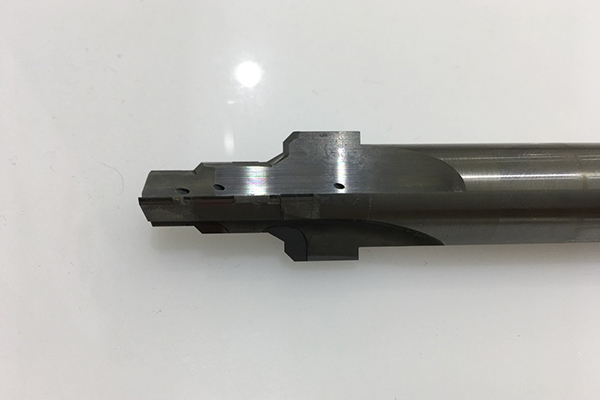
Fig. 1 Step and chamfer drill
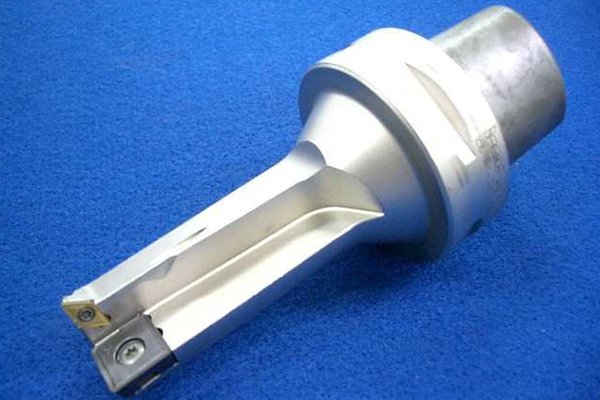
Fig. 2 Multi tool made by ISCAR

The former type includes chamfer drills and step drills. The chamfer drill, for example, can perform drilling and chamfering with a single tool path. This ensures better machining accuracy (positioning accuracy). In ordinary chamfering, one tool handles multiple chamfering operations, so it is difficult to know the relationship between the frequency of use and the tool life. Meanwhile, the chamfer drill offers easy tool life management, and is particularly useful for mass production machining.

The latter type includes the tool shown in Fig. 2. This tool can handle all of the 10 machining processes shown in Fig. 3. We conducted machining of these 10 processes in two ways: one is ordinary machining with multiple different tools, and the other is machining with a multi tool, and compared their machining times. Ordinary machining required 8 minutes 37 seconds to finish all the processes, while a multi tool completed machining in 6 minutes and 27 seconds, which is 130 seconds shorter than ordinary machining. In other words, we have achieved 25% shorter cycle time by the use of the multi tool.

Fig. 3 10 machining processes

This is only one example among many, but the multi tool can enhance its effectiveness especially when machining time is long. Also, the multi tool allows an effective use of a tip as you can use a different part of the cutting edge during the same machining process by changing the rotation angle of the axis. This is another advantage of the multi tool.

However, it should be noted that the multi tool has also disadvantages: the range of use is limited if used with a general 3-axis machining center; tool rigidity is relatively low due to its narrow shank part; and difficult programing with CAM.

Fig. 4 Combined tool made by SANDVIK

Fig. 5 Multi tool made by Tungaloy

Everything has its advantages and disadvantages, and the multi tool is no exception. But the tool could bring more advantages than disadvantages if you can make full use of it. We recommend the multi tool to those who have been using a mill-turn machine, or those consider buying the machine. The combination of a mill-turn machine and a multi tool can bring about a “multiplicative” effect, rather than an “additive effect.” So, please feel free to contact us using the form below for any questions or concerns about the use of the multi tool.

The bookmark function is a service restricted to members.
To use it, you must register as a member and log in.