
- Ví dụ về trường hợp khách hàng 2017/10/18 UP
-

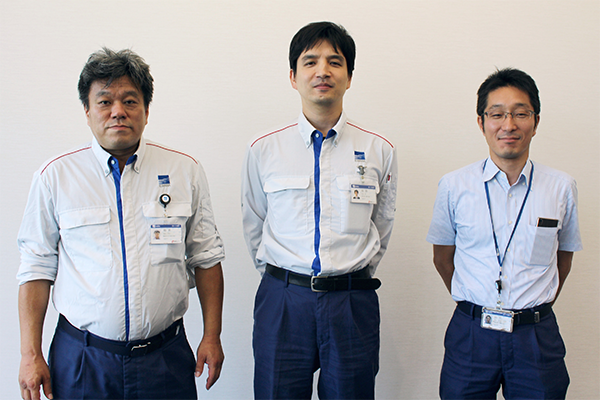
Mr. Masahiro Kashiwai, General Manager at the Production & Procurement Division ,Production Engineering Department (left), Satoshi Matsuda at the Production & Procurement Division, Process Innovation Section, Takashi Yamakawa, Manager at Production Process Division, Production Engineering Department, Machining & Assembly Section、EBARA Corporation (right)
The Elliot Group has a factory in Chiba Prefecture. They specialize in designing and manufacturing of compressor turbines and cut large workpieces in-house in high-mix, low-volume production. Recently, they have promoted the use of automation systems to achieve high-quality machining “with less time and care.” “But we had never been able to measure the effectiveness or get tips for improvement from it,” recalls Mr. Masahiko Kashiwai, General Manager at the Production Engineering Department.
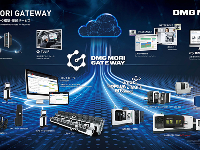
We asked Mr. Kashiwai about three things he learned after introducing the DMG MORI’s visualization tool “DMG MORI Messenger.
- Less time to figure out operation hours, and more time to think about how to make the most of the collected data
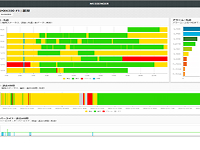
- Able to check cutting time and setup time of each equipment at a glance and to figure out what to be improved
- Easy to aggregate alarm history to identify abnormality based on alarm frequency before possible breakdown

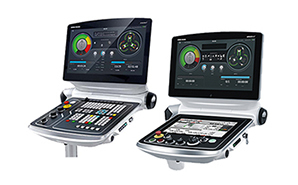
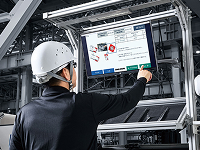
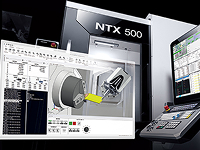
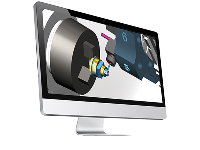
The machine operation status can be checked on a note PC via DMG MORI Messenger.
Background
The Elliott Group has promoted shop automation in recent years; on the other hand, not being able to measure the effectiveness had been one of their issues. Even when their equipment is in operation for long hours, they couldn’t figure out how much time is spent on cutting or setups. In the midst of the technological trend where IoT and visualization solutions are hot topics, the trend caught the imagination of the company. The Elliott Group, with a spirit of “give it a try,” introduced DMG MORI Messenger as it already owned a number of the DMG MORI machines at the time.
Point 1
Less time to figure out operation hours, and more time to think about how to make the most of the collected data.
Before employing the DMG MORI Messenger, they had to check operation hours with an analogue counter and write down the total hour (setup time and cycle time of actual machining calculated when the NC program is created) manually. As their hands were full trying to maintain records, it was impossible to fully convert the data into electric form for data analyzation. They also had to make regular rounds in the factory to check whether equipment is in operation without failure. With the DMG MORI Messenger, the operation rate can be automatically collected and recorded in digital form, which enables them to use more time to think about how they can use the data effectively.
Point 2
Able to check cutting time and setup time of each equipment at a glance and to see what to be improved.
Before it was difficult to figure out what is taking long in operation – whether it was setup time or cutting time. Now DMG MORI Messenger allows operators to check cutting time and non-cutting time of each equipment at a glance, so it has become possible to identify the equipment whose setup time is longer than others and a machining process whose cutting time is unusually long. Furthermore, DMG MORI Messenger helps shop owners to make a right decision on whether he or she should make an additional capital investment or make further efforts to reduce setup time during busy business periods. “We will make full use of the data to identify where to streamline in setup and improve programming for shorter machining time,” says Mr. Kashiwai.
Point 3
Easy to aggregate alarm history to identify abnormality before breakdown, based on alarm frequency.
Before they used to find equipment abnormality from repair request from operators, so they did not know what caused an alarm to set off. There was no way for them to know a problem and tackle it until failure actually occurs. DMG MORI Messenger enables operators to collect alarm history easily and to figure out which unit needs maintenance before failure occurs. For example, when an alarm informing that a door is not closed occurred, operators used to close the door him/herself, and it was done. With DMG MORI Messenger, the alarm identifies a problem so that operators can do maintenance before it leads to breakdown.
This content is for members only