




- Contoh Kasus Pelanggan 2023/07/27 UP
-
The Nagano Prefecture Nanshin Institute of Technology is a prefectural industrial educational institute that opened in April 2016. Centering on labs, it aims to develop digital engineers with active roles on sites through small-class teaching with only 20 students per class. The Digital Academy was introduced in the 2022 school year for students in Mechanical Engineering. We interviewed about the specific applications and the benefits it had over the year.
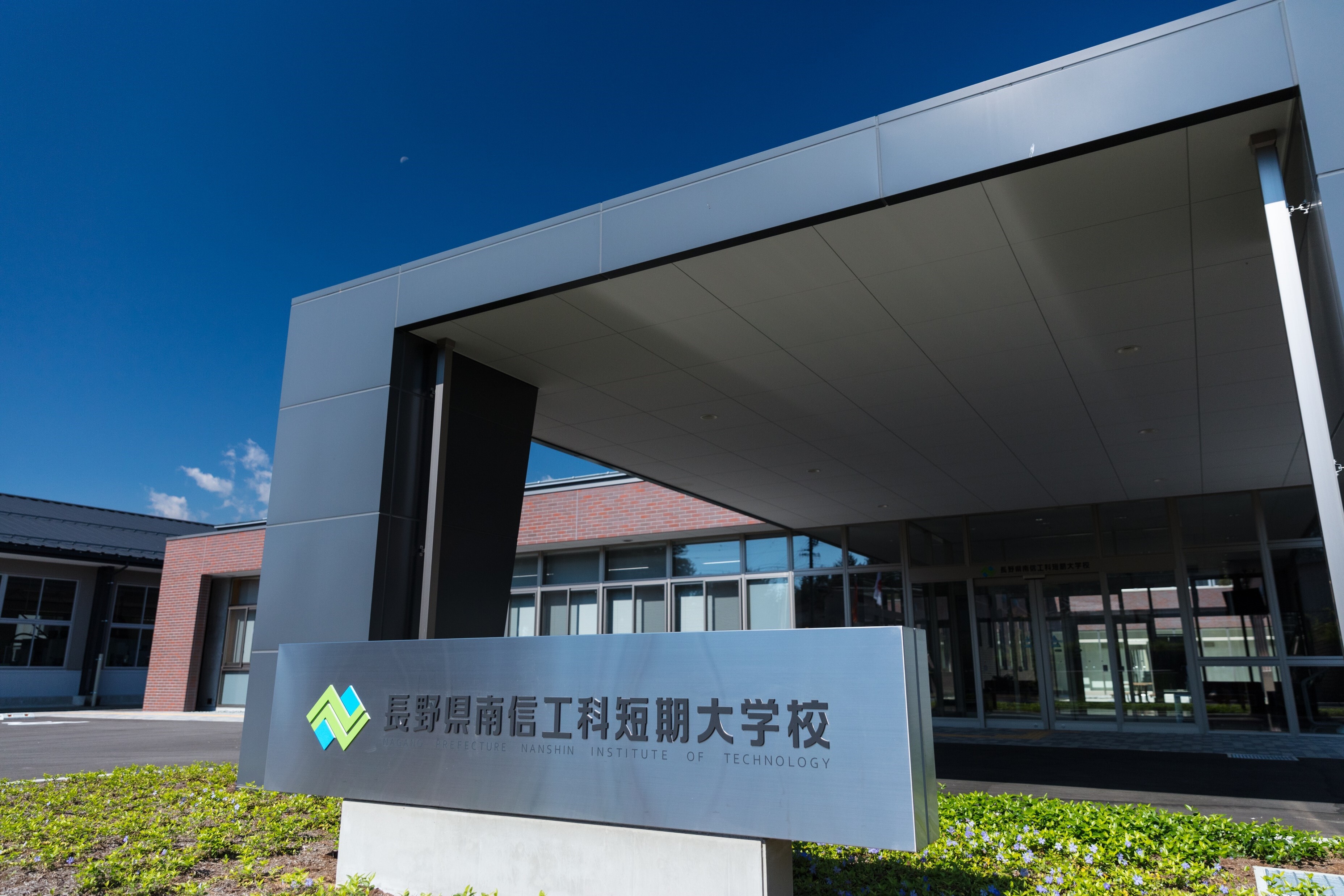
Opened as the second polytechnic junior college in the prefecture in Minami-Minowa Village,
the Institute cultivates industry-ready engineers with original curricula
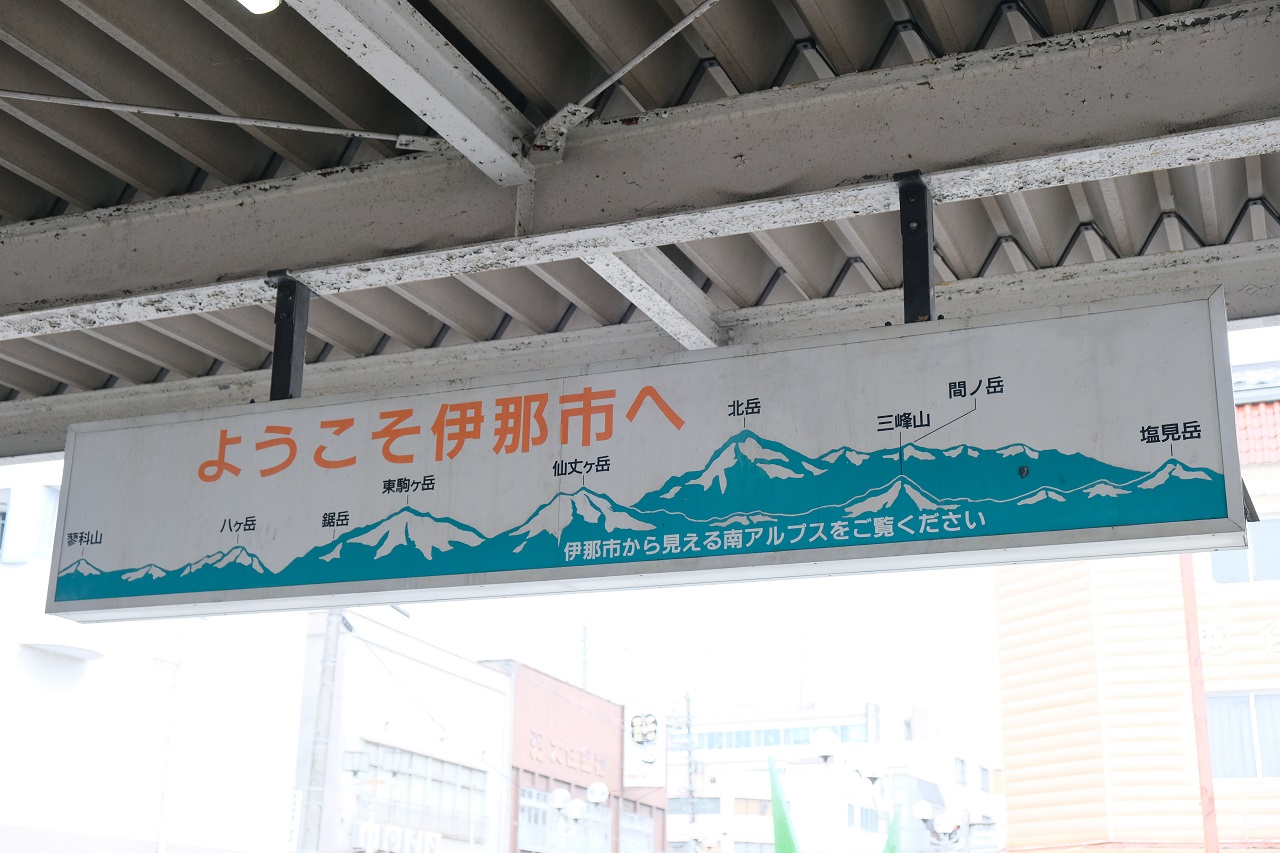
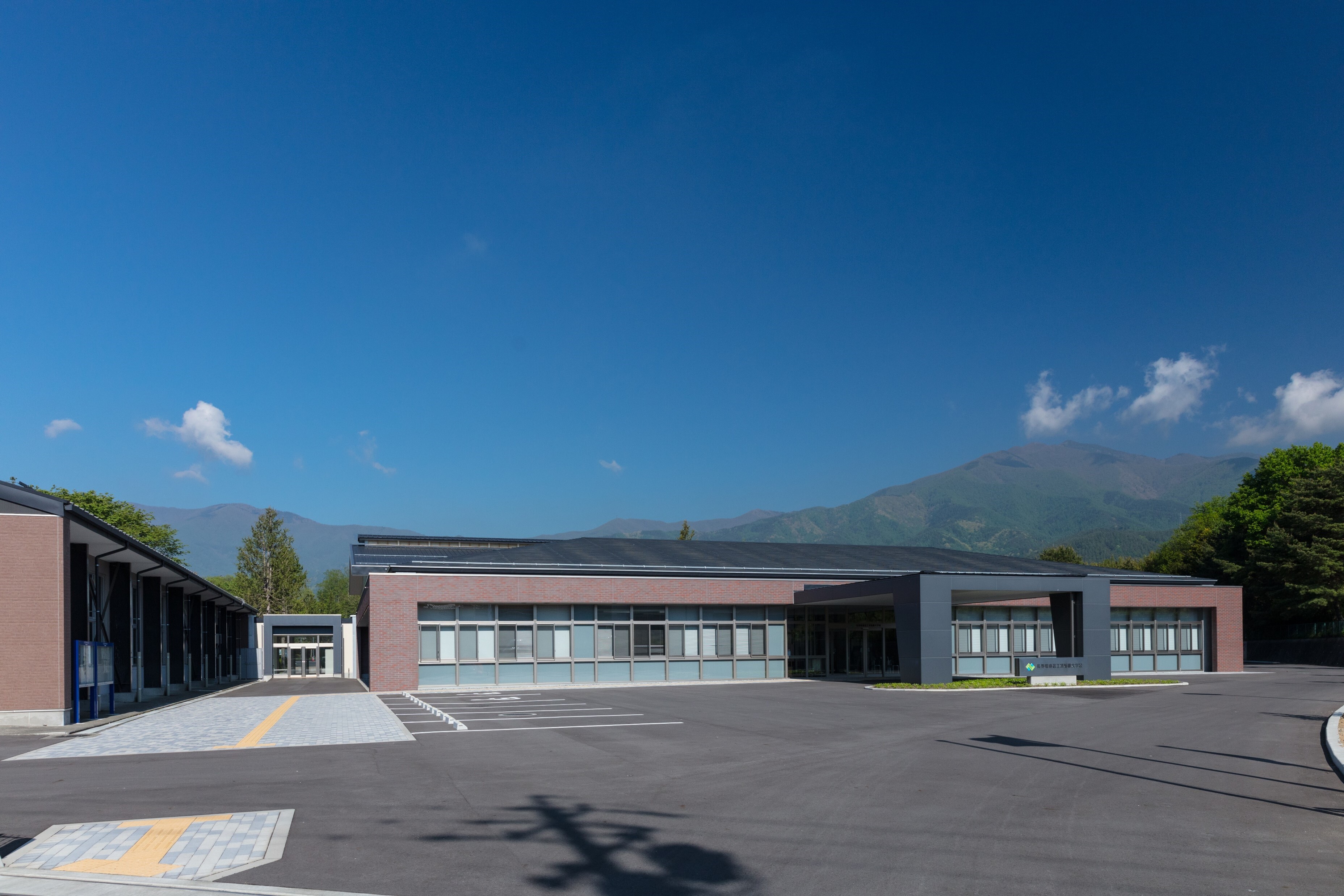
The Institute is immersed in majestic nature, situated between the South Alps in the east and the Central Alps in the west
Improving educational effects with the Digital Academy and DMG MORI’s machine tools
The lab rooms of the Nagano Prefecture Nanshin Institute of Technology are lined with DMG MORI’s NC machine tools. As of present, six of the seven total NC machine tools owned by the Institute are made by DMG MORI. “There are three reasons,” explains Professor Kazuo Nakajima of Mechanical Engineering. “Labs account for about half of the curricula of this Institute, so as a result of seeking performance and usability of machine tools, we came to DMG MORI’s products. That’s the first reason. The second reason is that DMG MORI has a large market share in FANUC control machine tools that are used as standard in Japan, and these machine tools are also commonly used at where students will be employed. The third reason is that standardizing the machine tools to a single manufacturer can improve proficiency in both faculty members and students. DMG MORI’s control units allow for intuitive operation and have high reputation from students that they are easy to use and can be smoothly set up.
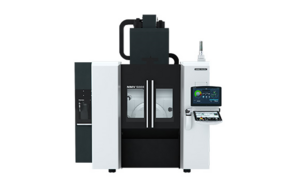
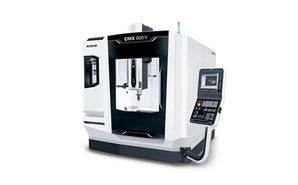
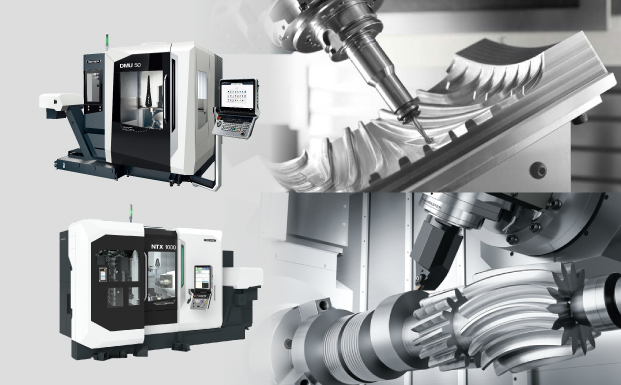
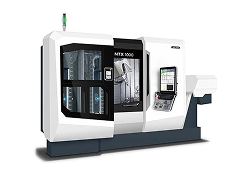
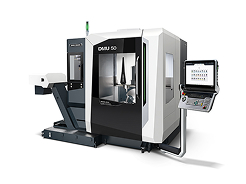
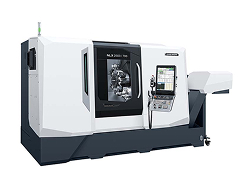
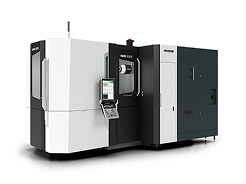
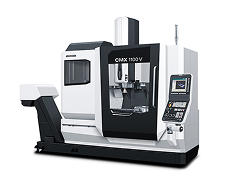
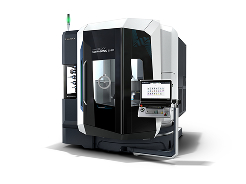
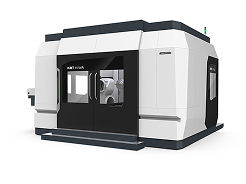
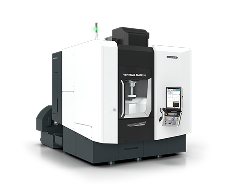
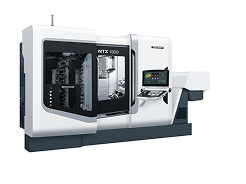
Six DMG MORI machine tools: 5-axis Machine, Machining Center, and Turning Center
Professor Kazuo Nakajima, Mechanical Engineering, talks about the usefulness of machine tools as learning materials
In order to further enhance the effectiveness of labs and lectures using these machine tools, the Digital Academy was recommended during the consultation to introduce an educational tool. “We have known from various lab experiences that explanation by video is easy-to-understand and effective in teaching machine tools. So we asked for video content from the start. Technium’s content can be accessed from anywhere―be it a classroom or at home—and allows students to prep, review, and repeat lessons. Since the Institute is using DMG MORI’s machine tools, we thought standardizing learning materials could be conducive to deeper understanding.”
Displaying video on the classroom monitor to have the class answer quizzes
First and second-year students (20 students in each year) in Mechanical Engineering (two-year course) and “6-month mechanical engineering course” students (10 students) dispatched from local companies for training participate in the Digital Academy. The Institute adopted four courses in the Digital Academy: Basic Machining, Basic Turning Center, Basic Machining Center, and Basic 5-axis Machine.
Specifically, we employ a customized style where we pick up videos of necessary units in the Digital Academy when needed according to the lecture and lab curricula. “For example, we used the video that shows the fundamental part of Basic Machining to explain machining methodology in classroom lecture, which first-year students learn first,” says Professor Nakajima. Lecturer Shunsuke Ayuzawa, who teaches turning center classes emphasizes the synergy of lectures and videos, “On the first day of turning center class upon enrollment, I had the students watch Basic Machining and Basic Turning Center videos that show how machine tools move, after explaining the structure and operation method of the machine using a textbook. Students can effectively deepen their understanding by watching relevant videos while receiving the lectures.”
Lecturer Shunsuke Ayuzawa (photo left) says “it simplified his material preparation because he can use the videos to explain the complicated movements of the axes”
In class, only the faculty member’s account is connected to the computer—not the individual students—to give explanations while showing the video on the classroom monitor. Unit quizzes and comprehension tests are also to be discussed and answered by the whole class watching the video instead of given individually.
The Digital Academy can also be used for preparation and review for self-learning, during waiting time for a lab, or at home. Associate Professor Yoshihiko Yazaki describes the benefits of Digital Academy, “If you instruct the students to read a certain part before class, you only need to give supplementary explanation during class, which leaves time to provide more detailed content. It also reduces the work time for preparation, such as making class materials, and leads to off-loading faculty members.”
Associate Professor Yoshihiko Yazaki says “many students use it for preparation and review at home”
More often than not, how to operate a machine tool and how a tool moves can be more easily understood by watching a video. “Previously, we explained the differences between 3-axis and 5-axis machine centers by drawing a picture, but the movement of the rotary axis and tilting axis, which are the different parts, could not be fully described with still pictures. A video can show how a 5-axis moves right away, which allows students to not only understand the actual movement, but also realize why the different machines are necessary,” emphasizes lecturer Ayuzawa about the advantage of Digital Academy. Lecturer Okamoto says, “DMG MORI Academy’s training center that appears in the videos is a white construction with a clean look, always kept neat and tidy. That also conveys the importance of the 5S awareness,” showcasing an unexpected effect.
Lecturer Ken Okamoto “tries to follow the cleanliness of the DMG MORI Academy’s training center”
Students can operate machines at a quicker pace
The Digital Academy is also well-received by students. “Textbooks only have text, images, and diagrams. Machines move too fast for students to follow during labs. However, many students say that, with videos, they can check what is happening with their eyes and ears at their own pace, enabling good understanding. In addition, while collective lectures and just showing a video will result in differences in comprehension level among students, Digital Academy allows for repeated reviewing later,” Professor Nakajima and Associate Professor Yazaki harmoniously comment on its contribution to improving knowledge.
Professor Nakajima says “the huge monitor used to show the video allows me to observe the students’ reactions well”
One year since the introduction of Digital Academy, what effects has it had over the year? “While there are some differences among individuals, we are now able to allow them to be on their own with the machines quicker than before. It also feels that there are fewer students who press buttons without understanding the structure of the machine tool or how to operate it. I feel that students are operating with better comprehension,” Professor Nakajima points out positive effects with confidence.
Lecturer Okamoto says, “I taught a class on turning center for the first time last year. In April, when classes started, I was concerned whether I would be able to achieve the planned study goals, but the utilization of Digital Academy helped ensure steady progress of the curriculum, and everyone achieved the study goal. We even had allowance to do additional assignments. Lecturers like myself who are teaching a class for the first time were able to reach the goal at the same pace as other faculty members, which was very good.”
<Comments from students who completed the Digital Academy course>
● Mr. A, Mechanical Engineering (6-month course)
I have taken a different e-learning course before, but it only had a comprehension check test for each unit after you finished watching the lesson video. The Digital Academy has a completion test in addition to the comprehension check test for each unit, which was beneficial for deepening my understanding.
● Mr. B, Mechanical Engineering (6-month course)
I was able to understand well through reviewing, in Digital Academy, what I wasn’t good at. Doing a test at the end of each unit helped me understand how well I understood the unit.
<“Final Project”: Nanshin Institute of Technology’s original program>
The Final Project is a program where a mixed team of students from two courses, Mechanical Engineering and Electrical Engineering, work together as a small group from planning to design, manufacturing, and production control. It is useful for not only experiencing the entire flow of manufacturing, but also to improve communication skills necessary in society.


Students in Mechanical Engineering and Electrical Engineering join forces
to create a single product for Final Project
Utilizing Digital Academy for short-term skill development courses for private sector employees
The Institute plans to continue using Digital Academy, and individual faculty members set up and execute their classes.
- “We have been using Digital Academy for a year with trial-and-error. Now that we are more familiar with the videos and how to use them, we would like to increase opportunities to use them. The Institute also offers a 4 or 5-day skill development course for people who are employed at companies. We would like to use Digital Academy for this course as well,” says Professor Nakajima.
- “I have also been fumbling my way through Digital Academy, but now that I know that it’s really good, I would like to use it more,” adds Associate Professor Yazaki.
- “I taught a 5-axis machining center class during the 2022 school year, but I will be teaching a class on 3-axis machining center in 2023. Since we can expect students to deepen their understanding of the basics when videos are used, I would like to actively utilize Digital Academy as well,” says lecturer Ayuzawa.
- “In the 2022 school year, I taught turning centers from scratch to first-year students who know nothing about machine tools. Those students are now in their second year. While second-year students do applied studies, it is still very important to review the basics, so I want to pick up some basic units in the Digital Academy from time to time for thorough repetitive learning,” says lecturer Okamoto.
In a well-equipped lab room, students work on completing a part from scratch to develop practical skills
Upon hearing the faculty members’ opinions, Executive Vice President Tadashi Tsuji of Technium Co., Ltd., a DMG MORI group company that runs Digital Academy, says as follows about future prospects. “The current Digital Academy was developed as a self-learning program for individual learning. Now that we learned from the example of Nagano Prefecture Nanshin Institute of Technology that people use it by course unit, when we make new content, we will develop an index function where students can jump to the desired unit. We will also try to respond to requests as much as possible.”
Nagano Prefecture Nanshin Institute of Technology and Technium will further collaborate to improve educational effects through active utilization of Digital Academy.
From left to right:
Professor Kazuo Nakajima (teaching classes on machining, machine design, and control techniques)
Associate Professor Yoshihiko Yazaki (teaching classes on machining and control techniques)
Lecturer Ken Okamoto (teaching a lecture class on turning center and a lab class on 2D CAD)
Lecturer Shunsuke Ayuzawa (teaching classes on machining, machine design, and drafting and design)
* Organization names and titles are current as of the publication of this article.
This content is for members only