Press Release
Hands-on Learning in Advanced Manufacturing:DMG MORI’s Practical Digital Manufacturing Course for Technical Colleges Across Japan
Since 2023, DMG MORI CO., LTD. (hereinafter “DMG MORI”) has been collaborating with technical colleges across Japan to offer the Practical Digital Manufacturing Course. Following the highly successful summer 2024 session, we are pleased to announce that the program will be held again in spring 2025.
This course offers a hands-on learning experience where students can operate the latest machine tools and automation systems while building a foundation in machining and production technology. The program consists of four components: 1) Remote Lectures, 2) Self-Learning, 3) Practical Training, and 4) Final Assessment.
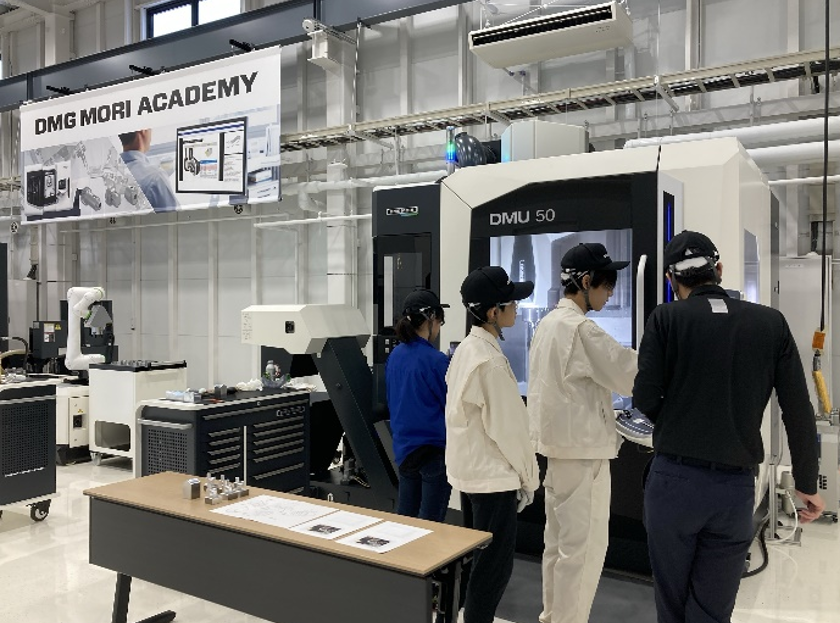
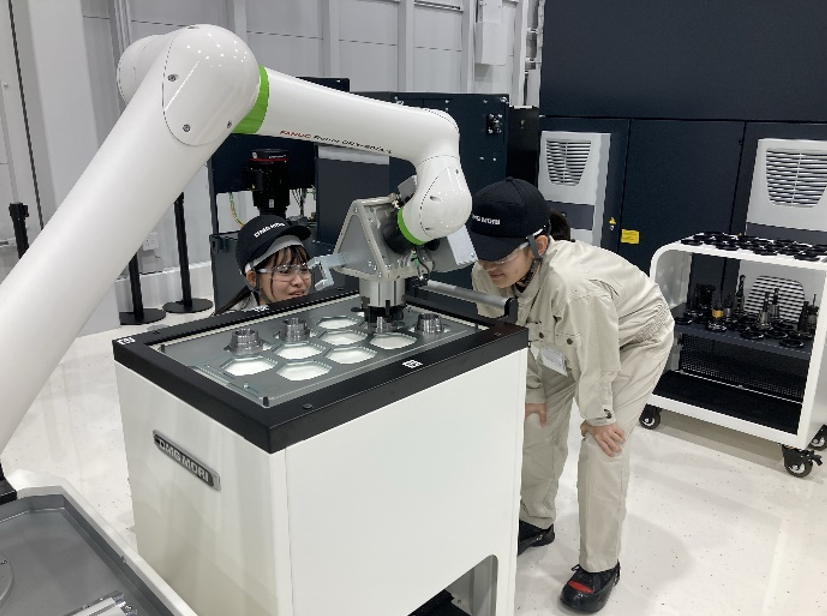
In the 1) Remote Lectures, participants watch pre-recorded sessions covering the current and future state of the machine tool industry, fundamentals of machining, and the latest advancements in 5-axis machining and automation technologies. During the 2) Self-Learning, participants use our Digital Academy, an e-learning platform launched in 2020. This platform covers the fundamentals of machining centers, 5-axis machining, and automation. Additionally, students can engage with specially developed VR content designed to teach essential safety practices for working in machining environments. The 3) Practical Training is a two-day special course held at our largest production site in Iga, as well as at our four DMG MORI ACADEMY locations across Japan. Using our 5-axis machine "DMU 50 3rd Generation” and automation systems, students gain practical experience in machine operation, robot handling, programming, and actual machining. In the 4) Final Assessment, participants are assessed on their understanding of the course content, with a focus on 5-axis machining and automation. Those who pass receive a certificate of completion, recognizing their successful participation in the program.
In 2024, approximately 100 students from 19 technical colleges across Japan participated in the program. Feedback from participants was overwhelmingly positive, with comments such as:
"I learned how to operate and program 5-axis machines and robots, gaining new skills and knowledge I hadn't encountered before."
"Even students from departments with little hands-on experience with machinery could learn from the basics, helping us connect classroom lessons to cutting-edge technology."
Additionally, the program provided valuable insights into the diverse career paths available, regardless of academic background.
We believe that providing learning opportunities for future engineers, as seen in this program, plays a crucial role in addressing various challenges in the manufacturing industry. Moving forward, we will continue to actively support the development of highly skilled talent essential for advancing Machining Transformation (MX).